


How Media Crews and Corporate Sponsors Move Differently During FIFA 2026
- greenlineny
- Feb 17
- 4 min read

When people think about transportation during the 2026 FIFA World Cup, they often imagine VIP executives heading to matches or fans traveling to stadiums.
But behind the scenes, two very different groups will dominate New York–New Jersey logistics:
International media crews
Corporate sponsors and hospitality hosts
Both are high-value, high-pressure operations.But how they move — and what they require — is fundamentally different.
Understanding these differences is critical for agencies, PR firms, and corporate planners preparing for FIFA 2026, especially in the New York region near MetLife Stadium.
Transportation planning that works for sponsors can fail for media. And logistics designed for media can frustrate corporate executives.
Here’s what you need to know.
The Core Difference: Speed vs. Precision
At a high level:
Media crews prioritize speed and flexibility.
Corporate sponsors prioritize timing and image control.
Both demand professionalism. But their operational psychology is very different.
How Media Crews Move During FIFA 2026

Media teams operate in controlled chaos.
They move based on:
Breaking news
Player availability
Press conference timing
Post-match interviews
Weather and crowd changes
Their schedule can shift multiple times in a single day.
Fluid Timelines
A media crew may plan to leave at 4:30 PM — but if a coach extends a press conference or a player appears unexpectedly, departure shifts instantly.
Transportation must allow:
Flexible standby time
Rapid rerouting
Immediate dispatch coordination
Rigid scheduling creates friction.
Equipment Logistics
Media vehicles often need to accommodate:
Camera rigs
Lighting kits
Tripods
Audio cases
Production backpacks
This changes vehicle requirements entirely. A luxury sedan might look impressive, but it may not fit gear efficiently.
Executive vans or SUVs with cargo planning become essential.
Multiple Stops Per Trip
Media rarely travel point-to-point.
A typical route might include:
Hotel pickup
Media center
Training facility
Stadium
Sponsor activation
Late-night newsroom
Each stop requires precise coordination and time awareness.
High-Volume Movement
Media organizations often move in teams, not individuals. Coordinating multiple journalists, videographers, and producers requires structured pickup plans and clear communication protocols.
For media agencies, transportation must behave like an extension of their production team.
How Corporate Sponsors Move During FIFA 2026

Corporate sponsors operate differently.
Their movement is built around:
Hospitality schedules
Executive meetings
Client entertainment
Brand image
Reputation management
Their focus is less about flexibility and more about flawless execution.
Fixed Timing, Zero Tolerance for Delay
Sponsor-hosted experiences often follow tight programs:
Private lunch
Pre-match hospitality
VIP entrance timing
Post-match executive dinner
Arriving even 10–15 minutes late can disrupt client impressions and affect relationship building.
Sponsors need:
Predictable arrival times
Route planning buffers
Professional chauffeur presentation
Image and Brand Alignment
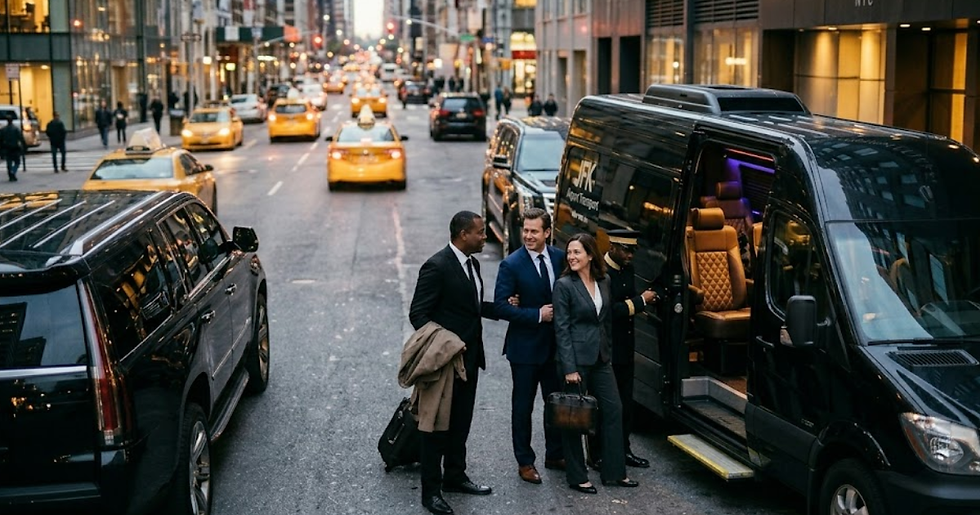
For corporate sponsors, the vehicle experience reflects brand identity.
Transportation becomes part of the hospitality experience.
Vehicles must be:
Immaculate
Discreet
Consistent across fleet
Professionally staffed
Unlike media crews, sponsors often care deeply about presentation symmetry — especially when hosting high-profile guests.
VIP Privacy Requirements
Executives and clients may discuss sensitive business matters between venues. Discretion matters.
Professional chauffeurs trained in confidentiality and corporate etiquette are critical in sponsor transportation — more so than for most media movements.
Controlled Guest Flow
Sponsors typically move guests in structured waves:
Airport arrivals
Hotel transfers
Group stadium departures
Coordinated returns
Group alignment is prioritized over spontaneous rerouting.
Where Many Agencies Get It Wrong
One of the most common mistakes during mega-events like FIFA is using a single transportation model for both groups.
But consider the operational difference:
Media Crews | Corporate Sponsors |
Flexible schedules | Fixed programs |
Equipment-heavy | Image-focused |
Multiple daily reroutes | Structured itineraries |
Fast adaptation required | Predictable timing required |
When planners treat these movements the same, friction occurs.
Media teams feel restricted. Sponsors feel rushed or disorganized.
The Geography Factor: NYC to New Jersey

Many out-of-state agencies underestimate the complexity of moving between Manhattan and MetLife Stadium.
Tunnel traffic, match-day congestion, and security perimeters can affect both groups — but differently.
Media crews may need faster drop-off flexibility near credentialed entrances.Sponsors may require VIP hospitality access points with structured arrival timing.
Route knowledge and local coordination become strategic assets — not just convenience.
What Agencies and PR Firms Should Plan Now
If you’re managing media or sponsor programs during FIFA 2026, consider separating your transportation strategy into two tracks:
Media Strategy
Flexible dispatch model
Equipment-capable vehicles
Standby-ready chauffeurs
Multi-stop coordination
Sponsor Strategy
Advanced route buffering
Consistent premium fleet
Professional chauffeur alignment
Structured manifest planning
Treat them as two different operations — because they are.
Final Thought: Transportation Is Operational Strategy, Not Just Movement
During FIFA 2026, transportation will either amplify your operational excellence — or expose its weaknesses.
Media teams require mobility and adaptability. Corporate sponsors require precision and brand protection.
Understanding how these groups move differently allows agencies, PR firms, and corporate planners to design logistics that align with each mission.
In an event as globally visible as FIFA, movement is not just about getting from point A to point B.
It’s about supporting storytelling.It’s about protecting reputation.It’s about enabling flawless execution — whether the camera is rolling or the VIP client is watching.


Comments