


US Open Group Transportation Logistics: How to Move 20, 50, or 100 Guests
- greenlineny
- 5 hours ago
- 6 min read

The US Open is one of New York City's biggest annual sporting events, but for event planners and corporate hospitality teams, getting guests to the tournament can be more complicated than simply booking a few cars.
When you're responsible for 20, 50, or even 100 guests, transportation becomes a logistics operation.
Guests may be staying at different hotels. Some may arrive through JFK, while others come through LaGuardia or Newark. Executives may have different schedules, and VIP guests may require separate vehicles.
A successful transportation plan needs more than enough vehicles. It needs coordination, scheduling, communication, and contingency planning.
This guide explains how event planners and corporate hospitality agencies can organize group transportation for the US Open.
Why US Open Group Transportation Requires Planning
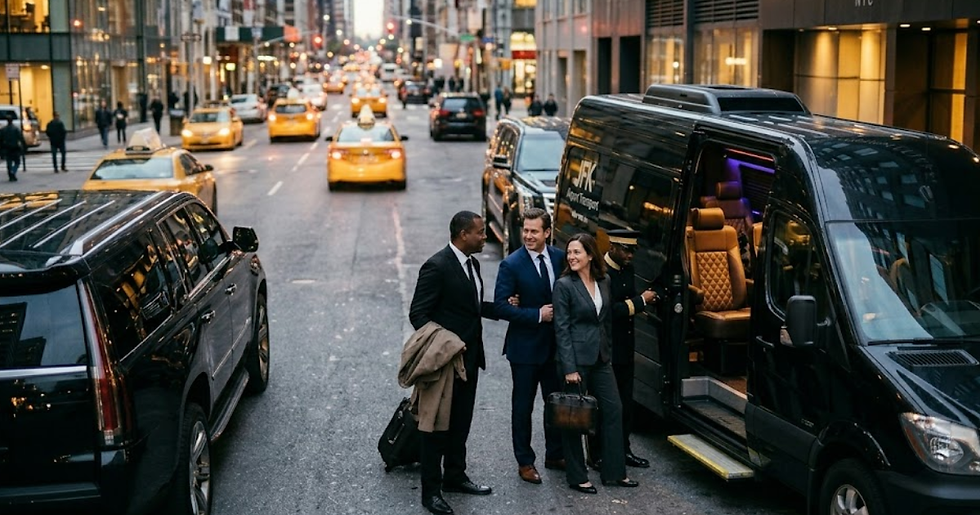
A large group rarely moves like a single group. A corporate hospitality program might include:
CEOs and senior executives
Clients and business partners
Employees
Sponsors
International guests
Event staff
Media representatives
They may arrive at different times and stay at different hotels. Then, on match day, everyone needs to reach the event within a specific arrival window.
After the match, transportation needs to be ready again. That is why large-event transportation should be treated as a logistics plan rather than a simple car booking.
Moving 20 Guests: Start With a Simple Group Plan
A group of approximately 20 people is large enough to require coordination but small enough for a relatively straightforward transportation plan.
Depending on the itinerary, an event planner might use:
One or more Sprinter vans
A combination of SUVs and Sprinter vans
Separate executive vehicles for VIP guests
The right setup depends on passenger count, luggage, pickup locations, and whether everyone needs to travel together.
Instead of arranging individual rides for every guest, a coordinated group transportation plan can keep the itinerary organized.
Moving 50 Guests Requires Vehicle Coordination

Once the group reaches approximately 50 people, transportation becomes more complex.
One large vehicle may not be the best solution.
Instead, planners can build a multi-vehicle transportation plan using a combination of Sprinter vans, SUVs, and other appropriate vehicles.
For example:
Sprinter Van A — Group 1
Sprinter Van B — Group 2
Sprinter Van C — Group 3
SUV — VIP executives
The objective isn't simply to fill vehicles.
The objective is to make sure every vehicle has a clear assignment, pickup location, passenger list, and schedule.
Moving 100 Guests Is a Logistics Operation
A 100-person corporate hospitality program requires significantly more planning. At this scale, transportation may involve:
Multiple Sprinter vans
Executive SUVs
Multiple pickup locations
Hotel coordination
Passenger manifests
Staggered departures
Dedicated transportation coordination
Return transportation planning
Guest Manifests Keep Everyone Organized
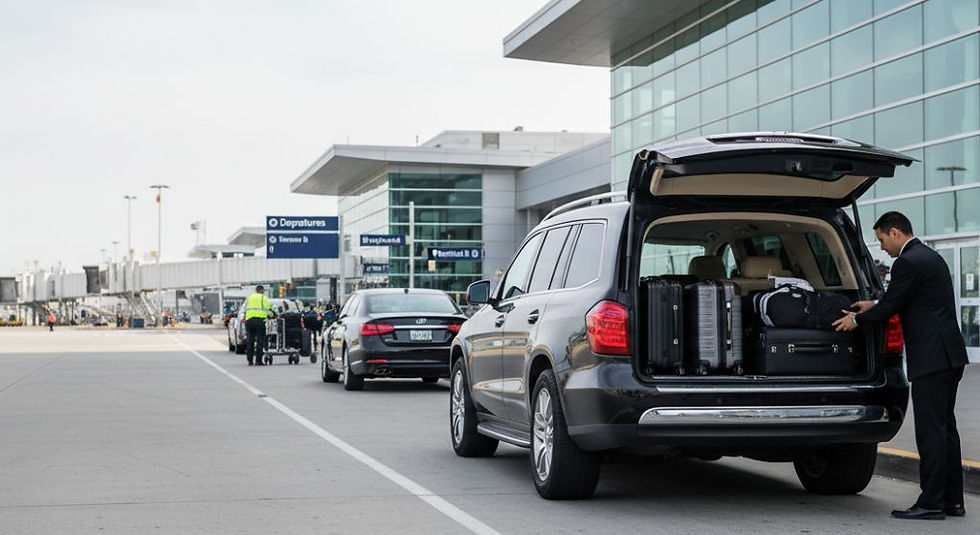
A guest manifest is one of the most useful tools for large-event transportation.
It can include:
Information | Example |
Guest name | John Smith |
Group | VIP Client |
Hotel | Midtown Manhattan |
Pickup time | 2:00 PM |
Vehicle | SUV 1 |
Destination | US Open |
Return group | Group A |
The exact information can vary depending on the event. The important thing is that planners, transportation coordinators, and relevant staff have a shared understanding of the movement plan.
Why Sprinter Vans Work Well for US Open Groups
Sprinter vans can be particularly useful when several guests need to travel together.
They can help groups:
Stay together
Reduce the number of separate vehicles
Simplify communication
Accommodate luggage and personal items
Create a more consistent guest experience
They're particularly useful for:
Corporate groups
Client hospitality
Event agencies
International visitors
Friends and family groups
When SUVs Make More Sense

Not every guest should necessarily travel in a Sprinter van. Executive SUVs can be useful for:
CEOs
VIP clients
Senior executives
Small executive groups
Guests who require additional privacy
A mixed fleet can therefore be more effective than trying to put everyone into identical vehicles.
For example:
VIP executives → SUVs
Corporate guests → Sprinter vans
Event staff → Group vehicles
This approach allows transportation to match the needs of each passenger category.
Pickup Waves Can Make Large Groups Easier to Manage
One of the biggest mistakes event planners can make is trying to move everyone at exactly the same time.
Instead, pickup waves can help distribute transportation demand.
Wave 1
2:00 PM — VIP executives
Wave 2
2:15 PM — Corporate guests
Wave 3
2:30 PM — Remaining hospitality guests
The exact timing depends on the event itinerary, hotel locations, vehicle availability, and expected travel conditions.
The important principle is to build a schedule rather than create one massive departure.
Hotel Location Matters
Large US Open groups may not stay in one hotel.
A corporate hospitality program could have guests staying across several Manhattan properties.
That creates another logistical question:
Should every hotel have its own pickup?
Sometimes yes.
Other times, planners may establish centralized pickup points or organize separate vehicle groups.
The right strategy depends on the guest list and itinerary.
Airport Arrivals Add Another Layer
Some guests may fly into New York on the morning of the event. Others may arrive the day before.
International guests may also require additional time after landing for immigration, baggage collection, and airport procedures.
A transportation plan should therefore separate:
Airport transportation
from
Event transportation
and
Return transportation
This makes the overall itinerary easier to manage.
Event-Day Communication Is Critical

A transportation plan can look perfect on paper and still encounter changes on event day.
Flights get delayed.
Meetings run over.
Guests change plans.
Vehicles may need to be reassigned.
That's why communication matters.
Event planners should have a clear communication process between:
Event organizers
Transportation coordinators
Chauffeurs
Hotel staff
Guest representatives
Corporate contacts
Everyone doesn't necessarily need every piece of information, but the right people need the right updates quickly.
Planning for Last-Minute Changes
Large events rarely run exactly according to the original schedule. A VIP may leave early.
A client may decide to attend dinner. A meeting may run longer than expected.
An additional guest may need transportation. A flexible transportation plan makes these changes easier to handle.
Instead of treating the itinerary as fixed, professional event transportation should leave room for reasonable adjustments.
Don't Forget the Return Trip
Getting guests to the US Open is only half the transportation plan. The return journey can be just as important. After a match, guests may want to go to:
Hotels
Restaurants
Corporate events
Private dinners
Airports
Additional meetings
Event planners should determine return transportation before the event begins.
Guests shouldn't have to figure out how they're getting back after the match ends.
Why Corporate Hospitality Teams Need a Transportation Strategy

For corporate hospitality programs, transportation is part of the overall guest experience.
A poorly organized transportation plan can create:
Confusion
Missed schedules
Long waits
Communication problems
Frustrated guests
A well-organized plan helps create:
Predictable pickups
Clear vehicle assignments
Better communication
Comfortable group travel
A more professional experience
Transportation may happen behind the scenes, but guests notice when it works and especially when it doesn't.
How Square Limo Handles US Open Group Transportation

Square Limo approaches large-event transportation as a logistics and coordination service, not simply a point-to-point ride.
For US Open programs, transportation can be organized around:
Guest manifests
Hotel pickups
Airport arrivals
Executive transportation
Sprinter van transportation
SUV transportation
Multiple vehicles
Staggered pickup waves
Multi-stop itineraries
Return transportation
Whether you're coordinating 20 guests or a much larger corporate hospitality program, the transportation strategy should be built around your actual event schedule.
The goal is simple:
Get the right guests into the right vehicles at the right time.
US Open Group Transportation Checklist
Before your event, confirm:
Final guest count
Guest names
Hotel locations
Airport arrivals
VIP requirements
Luggage requirements
Vehicle assignments
Pickup times
Pickup locations
US Open session times
Return transportation
Emergency contact information
Event-day communication process
The earlier these details are organized, the easier it becomes to manage a large group.
Final Thoughts
Moving 20 guests to the US Open is different from moving 50. Moving 50 is different from moving 100.
As the group gets larger, transportation becomes less about finding individual cars and more about building a coordinated transportation system.
Sprinter vans can keep groups together. SUVs can provide dedicated transportation for executives and VIPs. Pickup waves can distribute departures, while guest manifests and clear communication help everyone stay organized.
For event planners and corporate hospitality agencies, the goal isn't simply to provide transportation.
It's to create a transportation plan that works before, during, and after the event.
When you're responsible for dozens of executives, clients, or VIP guests, having an experienced transportation partner can make the difference between a complicated event day and a smooth one.
Planning a US Open group transportation program in NYC? Contact Square Limo to discuss your guest count, itinerary, vehicle requirements, and event-day transportation needs.

Comments