


How to Move a UNGA Delegation Across NYC: A Complete Transportation Logistics Guide

When an international delegation comes to New York for the United Nations General Assembly, transportation can quickly become one of the most complicated parts of the itinerary.
A delegation may have executives, government representatives, staff, assistants, security personnel, and other guests staying at different hotels and attending meetings at different locations.
The challenge isn't simply finding enough vehicles.
It's coordinating people, vehicles, schedules, chauffeurs, pickup locations, and last-minute changes so the entire delegation can move through New York efficiently.
For delegation coordinators, DMCs, event planners, and corporate hospitality teams, transportation should be treated as an event logistics operation.
Here's how to build that plan.
Why UNGA Delegation Transportation Requires More Than a Car Service
A typical delegation itinerary might include:
JFK → Manhattan hotel → UN Headquarters → Private meeting → Reception → Hotel
But larger groups may have several different itineraries running at the same time.
One executive may have a meeting at 10:00 AM.
Another delegation member may have a side event at noon.
A group may need to attend a reception in the evening.
That means transportation needs to be coordinated around the actual schedule of the delegation, not just individual rides.
Start With the Complete Delegation List
Before assigning vehicles, create a clear list of everyone who needs transportation. Important information can include:
Guest name
Role
Hotel
Airport, if applicable
Flight information
Number of passengers
Luggage requirements
Meeting locations
Pickup times
Destination
Return transportation
Special transportation requirements
This gives the transportation team a complete picture of the delegation. Without this information, vehicle planning becomes guesswork.
Choose Vehicles Based on the Delegation
Not every person needs the same type of vehicle.
Executive SUVs
SUVs can be appropriate for:
Senior executives
VIP guests
Delegation leaders
Individual travelers
Guests who require dedicated transportation
An SUV gives the passenger a private vehicle rather than requiring them to travel with the entire delegation.
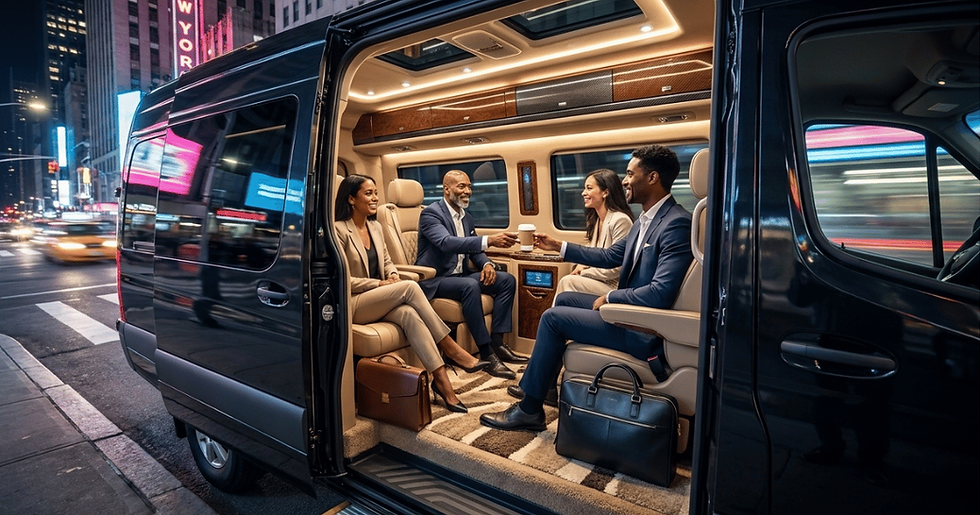
Sprinter Vans
Sprinter vans can be useful for:
Delegation members
Staff groups
Corporate teams
Guests traveling together
Groups with luggage
Keeping several people together can simplify transportation when their schedules and destinations match.
Build a Vehicle Assignment Plan

Once passenger requirements are known, assign each group to a vehicle.
For example:
Group | Passengers | Vehicle | Destination |
Delegation leader | 1–3 | SUV | UN Headquarters |
Senior staff | 5 | SUV/Sprinter | Meeting |
Delegation team | 10 | Sprinter | UN Headquarters |
Event guests | 12 | Sprinter | Reception |
The exact vehicle requirements depend on the group size, luggage, itinerary, and vehicle availability.
The important point is that vehicle assignments should be made before event day.
Use a Guest Manifest
A guest manifest is one of the simplest ways to keep a large transportation program organized.
It can contain:
Guest → Hotel → Pickup → Vehicle → Chauffeur → Destination
Coordinate Chauffeur Assignments
Every vehicle should have a clear assignment. The chauffeur should know the essential information required for the trip, including:
Pickup location
Pickup time
Guest or group assignment
Destination
Relevant itinerary instructions
Transportation coordinator contact
For larger programs, the event team should avoid relying on individual guests to explain their transportation arrangements to drivers. The transportation operation should already have the information.
Establish One Communication Chain

Communication can become complicated when dozens of people are involved. A delegation may have:
Event planners
DMC staff
Corporate representatives
Assistants
Hotel staff
Transportation coordinators
Chauffeurs
If everyone contacts everyone else, mistakes become more likely.
A better structure is:
Client/Delegation → Event Coordinator → Transportation Coordinator → Chauffeur
This gives everyone a clear point of contact.
If a meeting changes, the event coordinator can communicate the change to the transportation team instead of multiple people contacting different chauffeurs.
Plan Around Schedule Changes
UNGA schedules can be demanding. Meetings may run longer than expected. A guest may receive a new appointment.
A reception may change locations. An executive may need to leave an event earlier than planned. Transportation should therefore be planned with some flexibility.
For example:
Original plan: Hotel → UN Headquarters → Hotel
Updated plan: Hotel → UN Headquarters → Private Meeting → Reception → Hotel
The transportation team needs to know what changed, which guest is affected, and whether the vehicle assignment still works.
Don't Forget Airport Transportation
Many delegations begin their NYC itinerary at JFK, LaGuardia, or Newark. Airport transportation should be connected to the rest of the itinerary.
For example:
JFK → Manhattan Hotel → UN Headquarters
rather than treating the airport transfer as an isolated ride.
Flight information can help planners organize arrivals and identify potential scheduling conflicts.
For international travelers, planners should also allow appropriate time for airport processing and luggage collection rather than creating an overly tight schedule.
Coordinate Hotel Transportation

Hotels can become transportation hubs during UNGA.
A delegation may have several guests staying at the same hotel, while other VIPs stay at different properties. That makes hotel coordination important.
The transportation plan should identify:
Hotel
Guest group
Pickup location
Pickup time
Vehicle
Destination
For multiple hotels, the transportation provider and event team can organize the pickups into separate waves or routes based on the itinerary.
Plan Evening Transportation
UNGA transportation doesn't stop after daytime meetings. Delegations may attend:
Receptions
Networking events
Private dinners
Corporate events
Meetings
Hospitality events
The evening schedule should be included in the transportation plan before the day begins.
For example:
UN Headquarters → Reception → Restaurant → Hotel
This is especially useful for VIP and corporate groups that have several commitments in one evening.
Prepare for Contingencies

A professional transportation plan should include a process for unexpected changes.
Potential issues include:
Flight delays
Meeting overruns
Additional passengers
Early departures
Destination changes
Vehicle reassignment
Changes to evening plans
The goal isn't to predict every problem. The goal is to know what happens when something changes.
A clear communication process makes it easier to adjust the transportation plan without creating confusion throughout the delegation.
Why a Transportation Logistics Partner Matters
For a small group, transportation can be relatively simple. For a large UNGA delegation, it becomes a coordination problem. The transportation provider may need to manage:
Multiple vehicles
↓
Multiple chauffeurs
↓
Multiple hotels
↓
Multiple destinations
↓
Multiple schedules
↓
Real-time changes
That's why delegation coordinators should evaluate transportation companies based not only on their fleet, but also on their operational capabilities.
How SquareLimo Supports UNGA Transportation Logistics

SquareLimo works with organizations that need more than a single point-to-point ride.
For UNGA-related programs, transportation can be structured around:
Executive SUVs
Sprinter vans
Sedans
Airport transfers
Hotel transportation
Multiple-vehicle coordination
Guest manifests
Pickup waves
Chauffeur assignments
Multi-stop itineraries
Event transportation
Schedule changes
Return transportation
The objective is to integrate transportation into the broader event plan.
For DMCs and event planners, this means having a transportation partner that can work alongside the existing event operation rather than treating every ride as a separate booking.
Final Thoughts
Moving a UNGA delegation through New York requires more than having vehicles available.
The transportation plan needs to connect guests, hotels, airports, meetings, UN-related activities, receptions, dinners, and return transportation.
The most effective approach starts with a complete guest list and itinerary, followed by vehicle selection, guest grouping, pickup waves, chauffeur assignments, and a clear communication structure.
Most importantly, the plan should have a process for handling changes.
For DMCs, delegation coordinators, corporate hospitality teams, and event planners, that is the difference between booking transportation and managing transportation logistics.
When the operation is properly coordinated, guests can focus on their meetings and events while the transportation team handles the movement behind the scenes.
Planning transportation for an UNGA delegation in NYC? Contact SquareLimo to discuss your guest list, itinerary, vehicle requirements, and transportation logistics.


Comments