


How Event Planners Build a US Open VIP Transportation Plan From Scratch

Planning transportation for a US Open event is very different from booking a car for a single passenger.
When an event planner, DMC, corporate hospitality agency, or production team is responsible for dozens of VIP guests, transportation becomes part of the overall event operation.
Guests may arrive from different airports, stay at different hotels, attend different sessions, and have separate dinner or meeting schedules after the match.
The vehicles are only one part of the solution.
A successful US Open transportation plan connects the guest list, itinerary, vehicles, chauffeurs, pickup schedules, communication, and return transportation into one coordinated system.
This guide walks through how professional event planners can build that transportation plan from scratch.
Why US Open VIP Transportation Requires a Plan

The US Open attracts executives, sponsors, corporate guests, international visitors, athletes, media, and hospitality groups.
A corporate hospitality program might involve:
CEOs and senior executives
Important clients
Business partners
Sponsors
Employees
International guests
Event staff
These guests may not all have the same transportation requirements. A CEO might need a dedicated SUV.
A group of clients might travel together in a Sprinter van. An international guest may need an airport transfer before joining the rest of the group.
The transportation plan needs to account for these differences before event day.
Start With the Guest List
The first step is understanding who needs transportation. Before selecting vehicles, event planners should build a complete guest list.
Useful information can include:
Guest name
Guest category
Hotel
Arrival airport
Flight information
Number of passengers
Luggage requirements
VIP status
Event schedule
Special transportation requirements
For example:
Guest Group | Transportation Need |
CEO | Executive SUV |
VIP client | Executive SUV |
Corporate guests | Sprinter van |
International guests | Airport transfer |
Event staff | Group transportation |
This information becomes the foundation of the entire transportation operation.
Choose the Right Vehicles

Vehicle selection should come after understanding the guest list and itinerary. The goal isn't to put everyone into the same type of vehicle.
Instead, match the vehicle to the passenger and their requirements.
Executive SUVs
A luxury SUV can be appropriate for:
CEOs
Senior executives
VIP clients
Individual guests
Small executive groups
It provides a more private transportation experience.
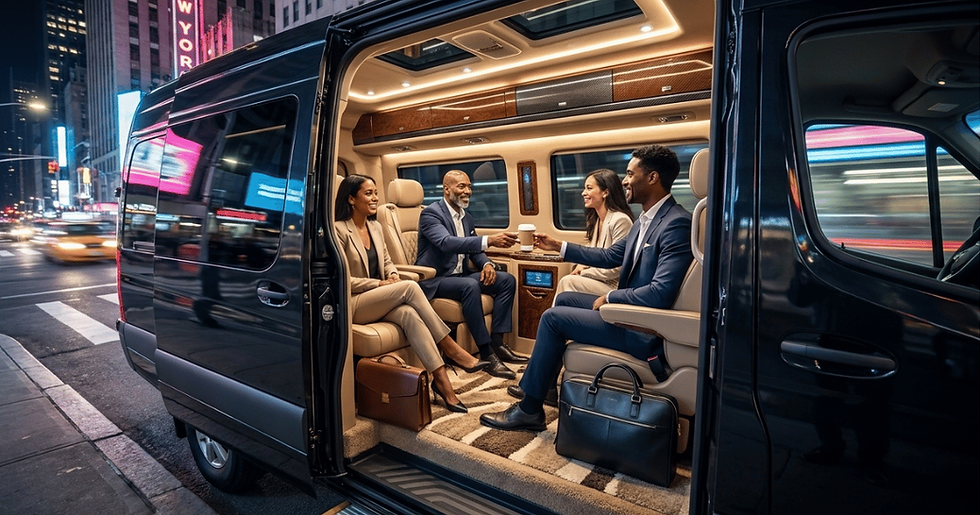
Sprinter Vans
Sprinter vans can be ideal for:
Corporate groups
Client groups
Friends and families
Hospitality guests
Larger teams
Keeping guests together can simplify event-day coordination.
Executive Sedans
Sedans can work well for:
Individual airport transfers
One-on-one executive transportation
Smaller movements between meetings
For larger programs, a mixed fleet may be more effective than relying on one vehicle type.
Create Pickup Waves

Trying to move every guest at exactly the same time can create unnecessary pressure.
Instead, event planners can organize pickup waves.
For example:
Wave 1 — VIP Executives
1:00 PM
Wave 2 — Corporate Guests
1:15 PM
Wave 3 — Remaining Hospitality Guests
1:30 PM
The exact schedule depends on hotel locations, traffic conditions, event timing, and the number of vehicles available.
The objective is to create a controlled flow of guests rather than one large transportation rush.
Assign Every Vehicle a Purpose
Once the vehicles are selected, each vehicle should have a clear assignment.
For example:
SUV 1 CEO + executive
SUV 2 VIP client
Sprinter 1 Corporate guests
Sprinter 2 Additional hospitality guests
This prevents confusion when multiple vehicles arrive at the same hotel or pickup location.
It also makes communication easier between event staff and transportation coordinators.
Coordinate Chauffeur Assignments

The chauffeur is an important part of the guest experience. For a major corporate event, chauffeurs should have the information necessary to complete their assignments efficiently.
That can include:
Guest name
Pickup location
Pickup time
Destination
Vehicle assignment
Relevant itinerary information
The more organized the information is before event day, the less time is spent resolving basic logistical questions.
Build a Guest Manifest
A guest manifest brings the transportation plan together. A basic manifest might include:
Guest | Hotel | Vehicle | Pickup | Destination |
CEO | Midtown | SUV 1 | 12:30 PM | US Open |
Client A | Midtown | Sprinter 1 | 12:45 PM | US Open |
Client B | Midtown | Sprinter 1 | 12:45 PM | US Open |
VIP Guest | Manhattan | SUV 2 | 1:00 PM | US Open |
For larger programs, additional information can be included based on the planner's needs.
The manifest gives the transportation team a single reference point for passenger movement.
Plan Airport Arrivals Separately

Some US Open guests will fly into New York specifically for the event. This creates another layer of planning.
Guests may arrive at:
JFK
LaGuardia
Newark
They may also arrive on different flights and at different times.
Airport transportation should therefore be planned separately from match-day transportation.
For example:
Day before event
JFK → Hotel
Event day
Hotel → US Open
After event
US Open → Dinner
Evening
Dinner → Hotel
This creates a complete transportation journey instead of treating the airport ride as an isolated booking.
Plan for Schedule Changes
This is where concierge transportation becomes especially valuable. Event schedules can change. A guest might:
Arrive late
Leave the match early
Add a meeting
Change dinner plans
Request another destination
Need an additional vehicle
A transportation plan should have enough flexibility to handle reasonable changes.
Event planners should also establish who is authorized to request transportation changes.
This prevents conflicting instructions from different members of the group.
Don't Forget the Return Transportation

Getting guests to the US Open is only half the job. Event planners also need to determine where everyone goes afterward.
Some guests may return to their hotels.
Others may attend:
Corporate dinners
Restaurants
Private events
Meetings
Airport departures
A good transportation plan should establish the return journey before the event begins.
Build a Contingency Plan
Professional event transportation should account for unexpected changes. Consider scenarios such as:
Flight delays
Guest cancellations
Additional passengers
Schedule changes
Extended meetings
Early departures
The exact backup strategy depends on the size and complexity of the event.
The important point is to avoid creating a transportation plan that works only if everything goes perfectly.
How SquareLimo Supports US Open Event Transportation
SquareLimo provides transportation for corporate groups, VIP guests, event planners, and hospitality programs that require more than a basic point-to-point ride.
Transportation can be organized around:
Guest manifests
Hotel pickups
Airport arrivals
Executive SUVs
Sprinter vans
Sedans
Multiple vehicles
Pickup waves
Multi-stop itineraries
Event-day coordination
Return transportation
For event planners and agencies, the goal is to make transportation one less thing to worry about on a busy US Open day.
Whether you're moving a small executive group or coordinating transportation for a larger hospitality program, the plan should be built around the guest experience and event schedule.
Frequently Asked Questions

How do event planners organize transportation for US Open VIP guests?
Event planners typically begin with the guest list and itinerary, then determine vehicle requirements, pickup schedules, chauffeur assignments, guest manifests, communication procedures, and return transportation.
What vehicles are commonly used for US Open corporate transportation?
Depending on the group, planners may use executive SUVs, sedans, and Mercedes-Benz Sprinter vans. Larger programs may use a combination of vehicle types.
What is a pickup wave?
A pickup wave is a scheduled group of passengers departing during a specific time window. Using multiple waves can help organize transportation for larger groups.
Why is a guest manifest important?
A guest manifest gives the event and transportation teams a centralized view of passenger names, hotels, pickup times, vehicle assignments, and destinations.
Should VIP guests have dedicated vehicles?
Depending on the guest and itinerary, dedicated SUVs or sedans can provide a more private and flexible transportation experience. Other guests can travel together in Sprinter vans.
Final Thoughts
US Open transportation is not simply about getting guests from a hotel to the tennis center.
For event planners, DMCs, corporate hospitality agencies, and event production teams, transportation is part of the entire guest experience.
The strongest transportation plans begin with the guest list, build around the itinerary, select the right vehicles, assign chauffeurs, organize pickup waves, establish communication, and plan the return journey.
For VIP and corporate programs, the vehicle is only one piece of the operation.
The real value comes from having a transportation partner who understands how all the pieces need to work together.
Planning transportation for a US Open hospitality program in NYC? Contact SquareLimo to discuss your guest count, itinerary, fleet requirements, and event-day logistics.


Comments